
“When it’s hot, Veo is my best option!”
“I have asthma and live a short distance from work. Veo helps me control my breathing on my commute.”
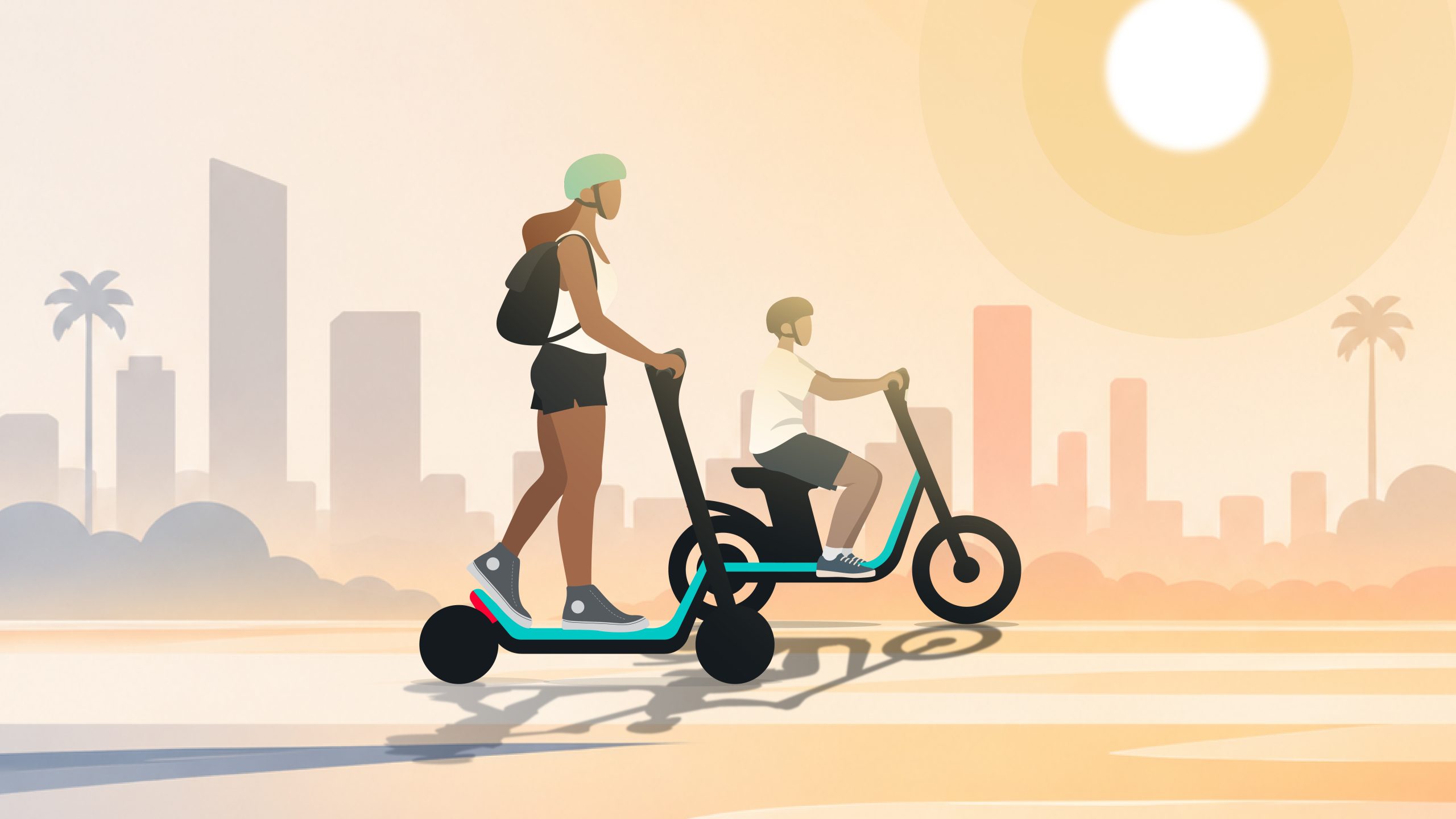
For years, riders have told us how shared scooters and bikes help them get around on hot days. Some have also described choosing a ride to avoid a longer walk outdoors when managing health conditions like asthma.
As we heard more of these stories, we wanted to better understand: How do shared scooters and bikes fit into everyday life when extreme heat, poor air quality, or wildfire conditions make it harder to get around?
To learn more, we surveyed over 2,600 riders across seven locations and held follow-up focus groups with 23 riders. We put our findings in a new report, Too Hot to Trot: Scooting Through Extreme Weather, which details what riders told us — and what cities and operators can do to better support those trips.
The study surveyed riders in Los Angeles, CA; the East Bay, CA; Bend, OR; Corvallis, OR; Toledo, OH; San Antonio, TX; and Washington, DC.
What Riders Told Us
- ▪ Riders already travel in extreme conditions: Across all seven locations in the study, 58% of respondents had ridden during extreme heat. 44% of respondents in air quality study areas had ridden in poor air quality. In the four fire-prone study areas, 24% had ridden during smoke or other wildfire conditions.
- ▪ Some riders choose a scooter or bike to shorten time spent outdoors: Riders described choosing shared scooters and bikes to avoid longer walks and waits for the bus during heat or poor air quality. Riders asked for timely, accessible information about conditions, health risks, and official guidance to help them decide whether, when, and how to travel.
- ▪ Shared micromobility must be available and affordable: A shared ride is only practical when riders can find a suitable vehicle within a reasonable walk and park close to their destination — at a price they can afford.
- ▪ Vehicle choice and street design expand access: Riders described how seated vehicles, throttle assist, and cargo capacity support different mobility needs and trips. Protected bike lanes helped riders feel more comfortable choosing a shared vehicle for their trip.
- ▪ Wildfire conditions require targeted planning: In the fire-prone study areas, 6% of respondents said they had used a shared scooter or bike to reach safety or evacuate during a wildfire, while 55% said they would consider it in the future. Beyond evacuation, shared scooters and bikes may help people make essential trips when wildfire conditions disrupt local transportation systems. Whether a shared scooter or bike is appropriate depends on local conditions, individual mobility needs, and official emergency guidance.
- ▪ Planning must focus on residents with fewer alternatives: Access to shared micromobility during extreme weather may be especially important for nondrivers and riders with low incomes, disabilities, and health conditions like asthma.
Recommendations for Cities and Operators
Cities and operators should start by identifying who has the fewest ways to make an essential trip when conditions worsen and plan for their needs. That includes people who don’t drive and riders whose options may be limited by cost, disability, or a health condition.
The report recommends that cities and operators work together to:
- ▪ Help people reach cooling centers and clean-air shelters: Offer ride credits and plan for vehicle availability and parking near those destinations.
- ▪ Make everyday routes easier to ride: Expand protected and shaded bike routes and provide a mix of vehicles for different mobility needs and trip types.
- ▪ Share timely information in the app: Give riders clear updates on local conditions, official guidance, and service changes.
- ▪ Agree on how service will operate during emergencies: Establish who will coordinate the response, where vehicles can be deployed, and what conditions would prompt operators to maintain, modify, or suspend service.
Veo looks forward to reviewing these recommendations with city emergency management teams to identify where shared scooters and bikes can support local transportation and emergency response plans.
Want to learn more? Download the report.