
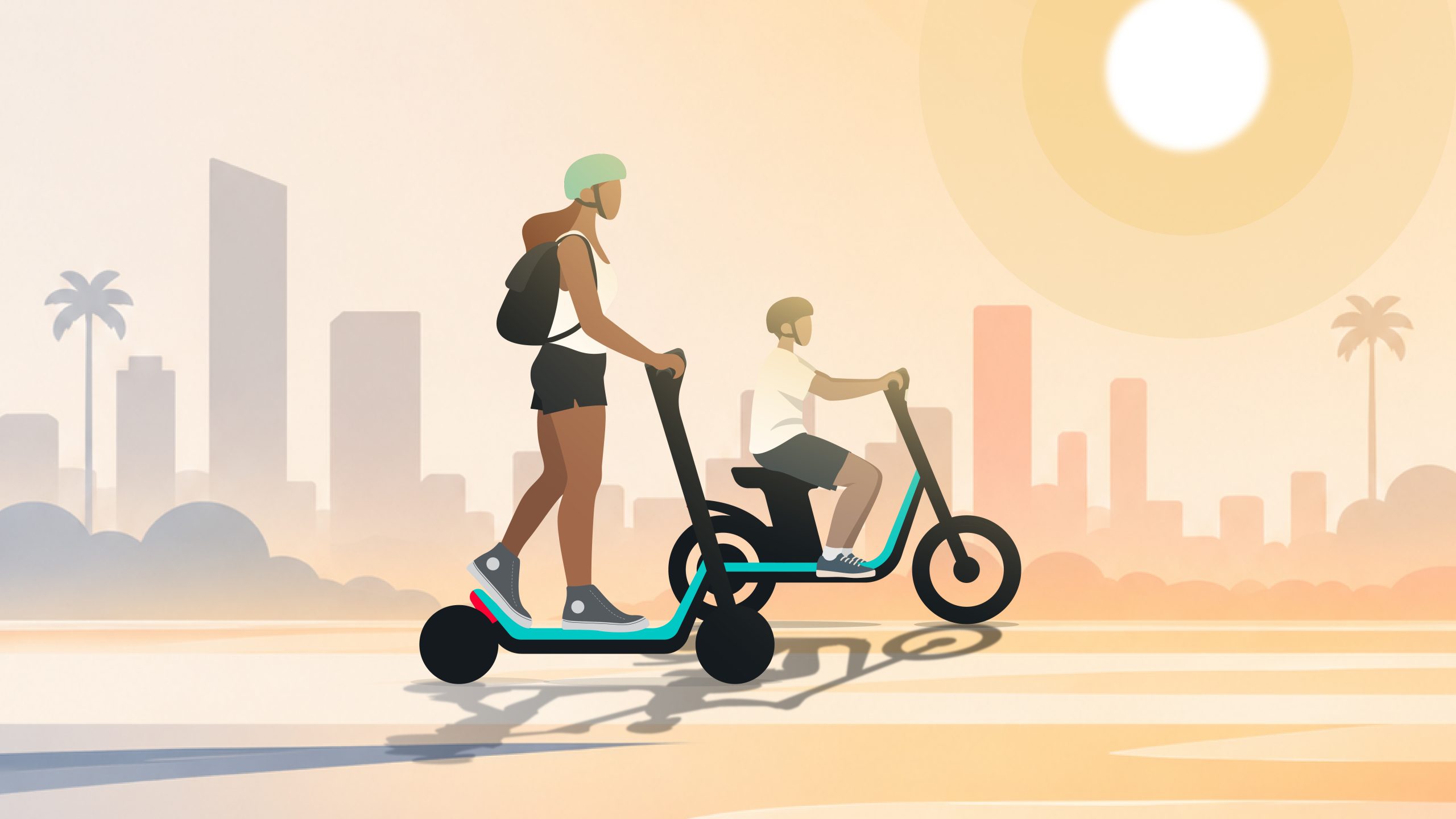
Survey of over 2,600 riders across seven locations identifies how people use shared scooters and bikes during extreme weather—and steps cities can take to support essential trips
Santa Monica, CA – November 18, 2026 – Following the hottest summer on record for the contiguous United States, new research from Veo examines how people use shared scooters and bikes to navigate extreme heat, poor air quality, and wildfire conditions. The report identifies steps cities and operators can take to make these services safer and more dependable for essential trips, particularly for people with few transportation options.
Too Hot to Trot: Scooting Through Extreme Weather draws on survey responses from over 2,600 riders across seven locations and follow-up focus groups with 23 riders. Participants described using shared scooters and bikes to avoid longer walks and waits for the bus outdoors, reduce physical exertion, and connect to public transit. They also identified barriers, including uncertainty about air quality, vehicle availability, and cost.
“As extreme weather becomes a more frequent part of everyday life, people still need to get to work, buy groceries, and reach essential services,” said Celeste Brown, Social Impact Lead at Veo. “For someone facing a 20-minute walk in extreme heat, a 5-minute ride on a scooter can significantly reduce their physical exertion and time outdoors. Our research shows how riders are already adapting their transportation choices and why cities should consider shared micromobility as part of their climate resilience planning.”
“We’re still learning how people use shared micromobility during extreme weather, and this report helps fill an important gap,” said John MacArthur, Interim Director of TREC at Portland State University, who provided guidance on the study’s design and analysis. “Riders’ experiences show that these services can help people make essential trips when heat, poor air quality, or other disruptions limit their options. That gives cities a reason to include shared bikes and scooters in climate resilience and emergency transportation planning, particularly for residents who don’t have access to a car.”
The study surveyed riders in Los Angeles, CA; the East Bay, CA; Bend, OR; Corvallis, OR; Toledo, OH; San Antonio, TX; and Washington, DC.
Key findings
-
- ▪ Communities are already using shared scooters and bikes during extreme conditions: Across all seven locations in the study, 58% of respondents had ridden during extreme heat. 44% of respondents in air quality study areas had ridden in poor air quality. In the four fire-prone study areas, 24% had ridden during smoke or other wildfire conditions.
- ▪ Riders use shared micromobility to shorten time outdoors—and need information to guide their decisions: Participants described choosing shared scooters and bikes to avoid longer walks and waits for the bus during heat or poor air quality. Riders asked for timely, accessible information about conditions, health risks, and official guidance to help them decide whether, when, and how to travel.
▪ Shared micromobility must be available and affordable: A shared ride is only practical when riders can find a suitable vehicle within a reasonable walk and park close to their destination—at a price they can afford.
▪ Vehicle choice and street design expand access: Riders described how seated vehicles, throttle assist, and cargo capacity support different mobility needs and trips. Protected bike lanes helped riders feel more comfortable choosing a shared vehicle.
▪ Wildfire conditions require targeted planning: Among respondents in fire-prone areas, 6% reported having used shared micromobility to reach safety or evacuate during a wildfire, while 55% said they would consider doing so in the future. Beyond evacuation, shared scooters and bikes may help people make essential trips when wildfire conditions disrupt local transportation systems. Whether shared scooters and bikes are an appropriate option depends on local conditions, individual mobility needs, and emergency guidance.
▪ Planning must focus on residents with fewer alternatives: Access to shared micromobility during extreme weather may be especially important for nondrivers and riders with low incomes, disabilities, and health conditions like asthma.
- ▪ Communities are already using shared scooters and bikes during extreme conditions: Across all seven locations in the study, 58% of respondents had ridden during extreme heat. 44% of respondents in air quality study areas had ridden in poor air quality. In the four fire-prone study areas, 24% had ridden during smoke or other wildfire conditions.
Recommendations
The report outlines recommendations for cities and operators, including offering ride credits to cooling centers and clean-air shelters, providing mixed vehicle fleets to meet diverse rider needs and trip purposes, expanding protected and shaded bike routes, and delivering timely in-app information about riding conditions.
For emergencies, the report recommends establishing coordination protocols between cities and operators, developing fleet deployment plans, and defining when service should be maintained, modified, or suspended.
As cities work to reduce transportation emissions and prepare for more disruptive extreme weather, shared scooters and bikes have a role to play in both efforts. Veo will review the recommendations with city emergency management teams to assess how shared micromobility can fit into local transportation and response plans.
Download the Report
Download Too Hot to Trot: Scooting Through Extreme Weather [PDF]
About Veo
Veo is on a mission to end car dependency by making clean transportation accessible to all. A leading shared micromobility provider in North America, Veo provides millions of bike and scooter rides annually in over 60 cities and universities from Los Angeles to New York City.
Veo operates the country’s most diverse shared micromobility fleet, with vehicles designed and manufactured in-house to expand who can ride and what trips are possible. As one of the only profitable shared micromobility companies, Veo is built for long-term partnership with cities and sustainable growth.
Veo has been recognized as one of Fast Company’s Most Innovative Companies and a Top GreenTech Company by TIME. Veo is committed to developing collaborative relationships with cities to build a sustainable, safe, and equitable transportation future.
###